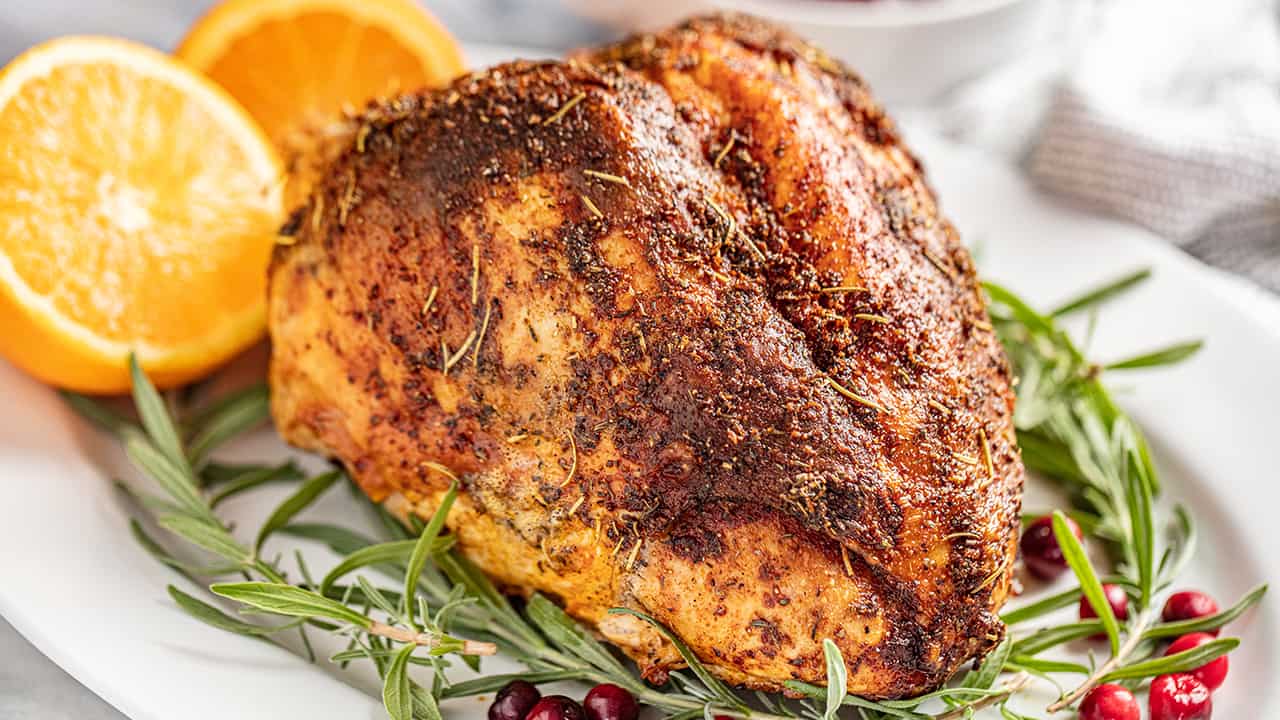
Why Roasted Turkey Breast Delivers Flavor & Juiciness Without the Hassle
Thanksgiving. Christmas. Or simply a delicious Sunday dinner. For many, the thought of roasting a whole turkey can be daunting, bringing with it visions of brining baths, basting marathons, and a frantic quest for fridge space. But what if we told you there was a simpler, equally satisfying way to enjoy that beloved turkey flavor and succulent meat? Enter the roasted turkey breast recipe – a culinary game-changer that promises all the deliciousness with none of the overwhelming fuss.
Whether you're cooking for a small household, a scaled-down celebration, or you're a beginner cook intimidated by a whole bird, mastering a roasted turkey breast is your ticket to a stress-free and incredibly flavorful meal. It's an approachable choice that consistently delivers juicy results and a crispy, golden skin, often leaving you with delightful leftovers without the same level of commitment.
Why Roasted Turkey Breast is Your Go-To for Flavor & Simplicity
Opting for a turkey breast over a whole bird offers a cascade of benefits, making it an increasingly popular choice for modern cooks. It's not just about convenience; it's about smart, efficient cooking that doesn't compromise on taste.
- Unmatched Convenience: Forget the hours of thawing, brining (unless you choose to, but this recipe makes it optional!), and the sheer physical effort of handling a large bird. A turkey breast is quicker to prepare and cooks in significantly less time, freeing you up to enjoy your guests or relax.
- Perfect for Smaller Gatherings: A single turkey breast typically feeds two to three people comfortably, often with leftovers. This makes it ideal for intimate family dinners, small holiday celebrations, or even meal prepping for the week. No more massive amounts of leftover dark meat if your family prefers white! You can, of course, easily scale up the recipe by roasting multiple breasts to accommodate a larger group.
- Budget-Friendly: Generally, purchasing a turkey breast is more cost-effective than a whole bird, especially if you're only feeding a few people. This saves you money while still delivering that iconic holiday flavor.
- Space-Saving: A turkey breast requires far less refrigerator and oven space. This is a huge advantage, particularly during busy holiday seasons when fridge real estate is prime.
- Consistent Juiciness and Flavor: With a smaller, more manageable cut, it's easier to achieve even cooking and prevent dry spots. Our focus on an herb butter treatment ensures every bite is infused with savory goodness and remains incredibly moist.
This approach transforms the daunting task of holiday turkey into an enjoyable, manageable cooking experience, perfect for anyone, from seasoned chefs to those taking their first steps in the kitchen. For more insights on simplified turkey prep, check out our guide on Effortless Roasted Turkey Breast: Ideal for Beginners & Small Meals.
Unlocking Peak Flavor: Herb Butter, Bone-In Benefits & Pre-Roast Prep
The secret to an exceptionally flavorful and juicy roasted turkey breast recipe lies in a few key preparation steps that elevate the meat from good to gourmet.
The Magic of Herb Butter
Our star ingredient for flavor infusion is a rich, aromatic herb butter. This isn't just for coating the outside; the real trick is to get some of that glorious butter underneath the skin. The butter melts directly into the meat as it cooks, basting it from the inside out and locking in moisture, while the herbs infuse every fiber with their fragrant essence. Simultaneously, the butter on the exterior helps the skin crisp up to a beautiful golden brown.
To make this simple yet powerful herb butter, combine softened unsalted butter with minced garlic, a generous pinch of salt and freshly ground black pepper, and your favorite fresh herbs. Classic choices include rosemary, thyme, and sage – the trio that instantly evokes holiday warmth. Mix them well until fully incorporated.
Bone-In vs. Boneless: The Juiciness Debate
While you can certainly use a boneless turkey breast for this recipe, we, like many culinary experts, are partial to bone-in turkey breast. The bone acts as a natural insulator, slowing down the cooking slightly and resulting in more flavorful, juicier meat. It contributes a richness that boneless breasts often lack. Bone-in breasts also tend to be larger, often sold as a half breast or a full breast (two halves joined at the bone).
If you opt for boneless, we still highly recommend choosing skin-on. The skin is a crucial barrier against drying out and a canvas for that delicious herb butter. Just be prepared to adjust your cooking time, as boneless breasts will cook faster due to their smaller size and lack of bone insulation.
Essential Prep Steps for Success
Before the herb butter even comes into play, a few crucial steps ensure your turkey breast is ready for its delicious transformation:
- Thawing: Ensure your turkey breast is completely thawed. This is critical for even cooking.
- Pat Dry: Using paper towels, thoroughly pat the turkey breast dry on all sides. This helps the skin crisp up beautifully and allows the seasoning to adhere better.
- Seasoning Foundation: Lightly season the turkey breast all over with salt and pepper before applying the herb butter.
- Herb Butter Application: Gently loosen the skin of the turkey breast with your fingers, being careful not to tear it. Spoon a generous amount of herb butter underneath the skin, spreading it evenly over the meat. Then, slather the remaining herb butter all over the outside of the turkey breast.
- Placement: Place the prepared turkey breast in a baking dish or on a sheet pan, ready for the oven. Don't forget to save those pan drippings after roasting – they're liquid gold for an accompanying turkey gravy!
The Science of Juiciness: Perfect Roasting Temperatures, Times & Resting
Achieving a perfectly juicy and tender roasted turkey breast recipe requires understanding the interplay of temperature, time, and the often-overlooked resting period.
Optimal Roasting Temperature and Time
For a bone-in turkey breast, a general rule of thumb is to roast it at 350°F (177°C) for approximately 20 minutes per pound. This consistent temperature ensures the turkey cooks through evenly without drying out the exterior too quickly. However, it's vital to remember that ovens vary, and the most accurate indicator of doneness is always the internal temperature, not just the clock.
For some recipes, a slightly lower temperature of 325°F (163°C) for about 14-15 minutes per pound is also suggested, which can lead to even more tender results, though perhaps with a slightly longer cooking time. Whichever temperature you choose, the golden rule remains:
- Target Internal Temperature: The turkey breast is fully cooked when an instant-read meat thermometer inserted into the thickest part of the breast (without touching the bone) registers a minimum of 165°F (74°C).
- Monitor Closely: Begin checking the internal temperature about two-thirds of the way through the estimated cooking time. You might even pull it out just shy of 165°F, as it will continue to cook a few degrees as it rests (this is called carry-over cooking).
The Critical Resting Period
Once your turkey breast reaches the target internal temperature, resist the urge to slice into it immediately! This is perhaps the most crucial step for guaranteeing juiciness. Remove the turkey from the oven, cover it loosely with aluminum foil, and let it rest for at least 10-15 minutes.
During roasting, the muscle fibers in the turkey contract, pushing the juices towards the center. Resting allows these fibers to relax and reabsorb those precious juices, distributing them back throughout the meat. If you cut into the turkey too soon, those juices will simply run out onto your cutting board, leaving you with a drier bird. A rested turkey breast will be significantly more tender and succulent.
Scaling Your Recipe
When planning your perfect roasted turkey breast recipe, consider how much turkey you'll need. As a general guideline, plan to purchase:
- 1 ½ pounds of turkey per person if you want leftovers.
- 1 pound of turkey per person if you don't anticipate or desire leftovers.
A typical 3-pound turkey breast will comfortably feed two to three adults with some delicious leftovers to spare, making it incredibly versatile for any meal size.
Troubleshooting & Tips for Your Best Roasted Turkey Breast Yet
Even with a straightforward roasted turkey breast recipe, a few common questions or scenarios might arise. Here are some tips to ensure your turkey breast is always a showstopper:
- What if the Skin Isn't Crispy Enough? If your skin isn't as golden and crisp as you'd like towards the end of cooking, you can increase the oven temperature to 400-425°F (200-220°C) for the last 10-15 minutes, watching it closely to prevent burning. Ensure the turkey was patted very dry initially, and ample herb butter was applied to the skin.
- My Turkey is Browning Too Fast! If the skin is browning much faster than the inside is cooking, loosely tent the turkey breast with aluminum foil. This will protect the skin from further browning while allowing the meat to cook through.
- Adding Moisture: While this recipe is designed for juiciness, if you're concerned about a particularly lean breast, you can place a shallow pan of water on the rack below the turkey to create a moist environment in the oven.
- Herb Variations: Don't feel limited to rosemary, thyme, and sage. Experiment with other fresh herbs like marjoram or even a touch of finely chopped parsley for a brighter flavor. A squeeze of fresh lemon juice in the herb butter can also add a delightful zest.
- Using the Drippings: As mentioned, don't discard the drippings! Deglaze the pan with a bit of chicken broth or white wine, then thicken with a roux for a simple, incredibly flavorful gravy that perfectly complements your turkey.
There's no need to be intimidated by cooking turkey. This roasted turkey breast recipe simplifies the process, making it accessible for everyone while consistently delivering moist, flavorful results. It's truly a testament to the fact that sometimes, less truly is more, especially when it comes to enjoying delicious food without the fuss.
